

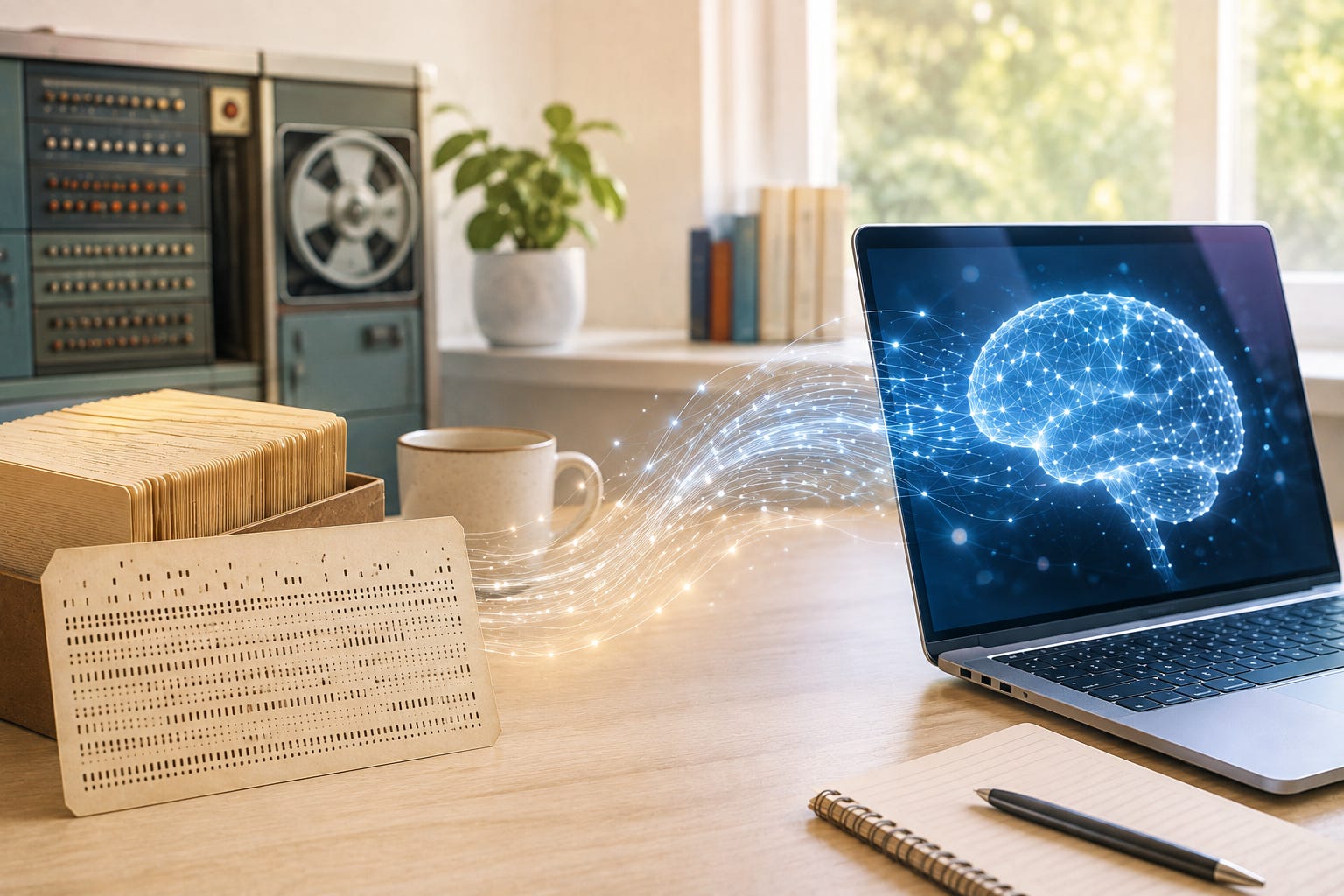
I became fascinated by computers before I’d ever actually used one.
In the late 1960s, I was studying biology at Aston University in Birmingham back in the UK, sharing a flat with two Welsh engineering students. One day I picked up one of their FORTRAN programming manuals and started reading it. Something clicked.
In biology, I was learning how a single fertilized egg somehow develops into an enormously complicated living organism. Cells divide, differentiate and organize themselves into tissues and organs. I began wondering whether you could write a computer program that simulated that process, and perhaps learn something about how it happened.
There was one fairly obvious problem. I didn’t have a computer.
So I learned to program, at least in theory, from my roommate’s FORTRAN manual. It wasn’t until several years later, when I moved to Edinburgh to do a PhD in genetics, that I finally got to try my programs on a real machine.
Using a computer then bore very little resemblance to using one now. There was no screen in front of me and certainly no keyboard connected to the computer. The mainframe lived in a computer center. I typed my program onto punch cards, handed over the stack of cards and waited - sometimes a day or more - to find out whether it had worked. Often it hadn’t. Then I found the mistake, punched another stack of cards and tried again.
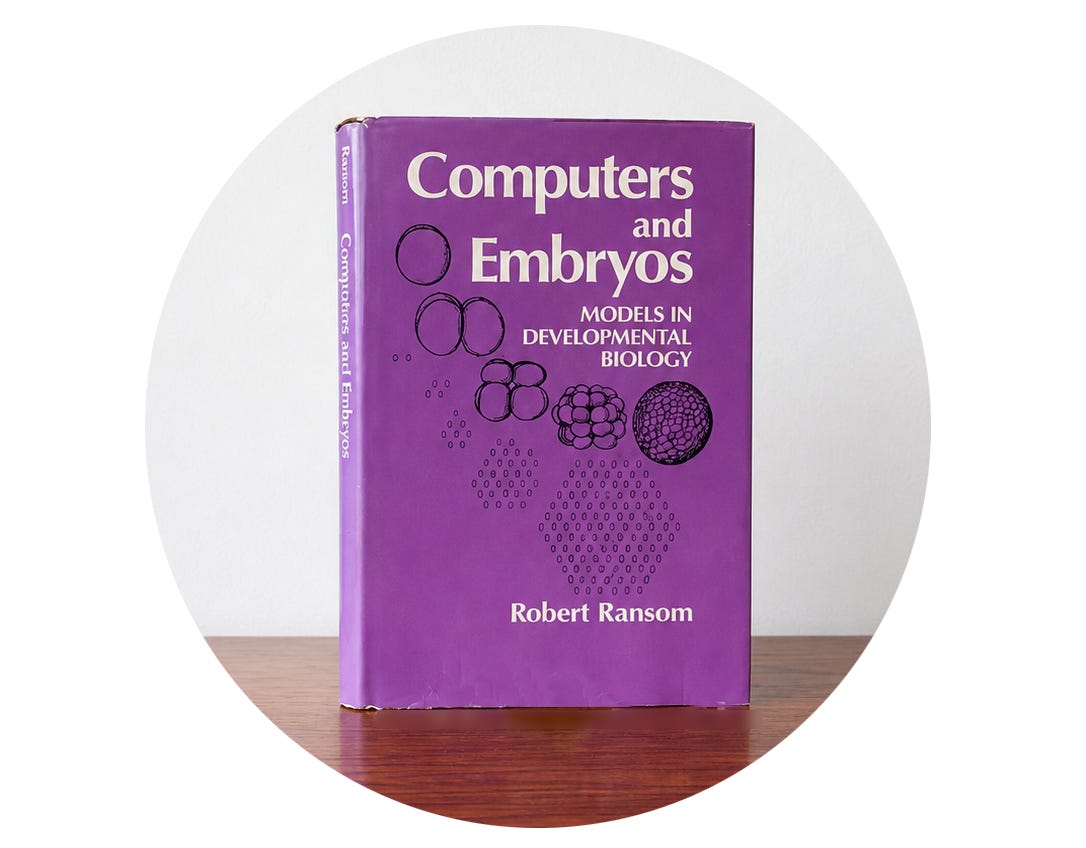
By 1973 I’d become sufficiently obsessed with using computers to simulate life to write an article for New Scientist called “Can a Computer Grow Limbs?” My PhD work was later published as a book, Computers and Embryos.
After that came personal computers, the Macintosh, graphical interfaces, the internet, smartphones and all the rest of it. I’ve had a ringside seat for a remarkable half-century of computing. But I don’t think any of it has surprised me quite as much as what is happening now.
More than 50 years ago I was wondering whether a computer could simulate the development of an embryo. Today I regularly sit at a computer and have a conversation with it.
From punch cards to conversation
Artificial intelligence isn’t new. There were researchers working on AI and machine intelligence in Edinburgh when I was doing my PhD, although what could actually be accomplished with the computers of the time was obviously limited. There was a computer program back in those days called ELIZA. It was the world’s first chatbot and mimicked intelligence by transforming input sentences and posing them back to the user. No real intelligence involved, although legend has it that the creator’s own secretary asked him to leave the room so she could have a private, emotional conversation with the program.
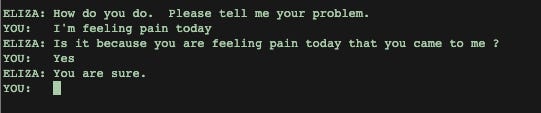
We’ve come a long way since the late 60s when ELIZA was written. Modern AI has completely changed the relationship between us and the computer. With the mainframe computer I used in Edinburgh, I had to learn its language. I had to tell it exactly what to do, in exactly the right way. Get one character wrong and the whole thing might fail — and I’d possibly have to wait until the next day to find out.
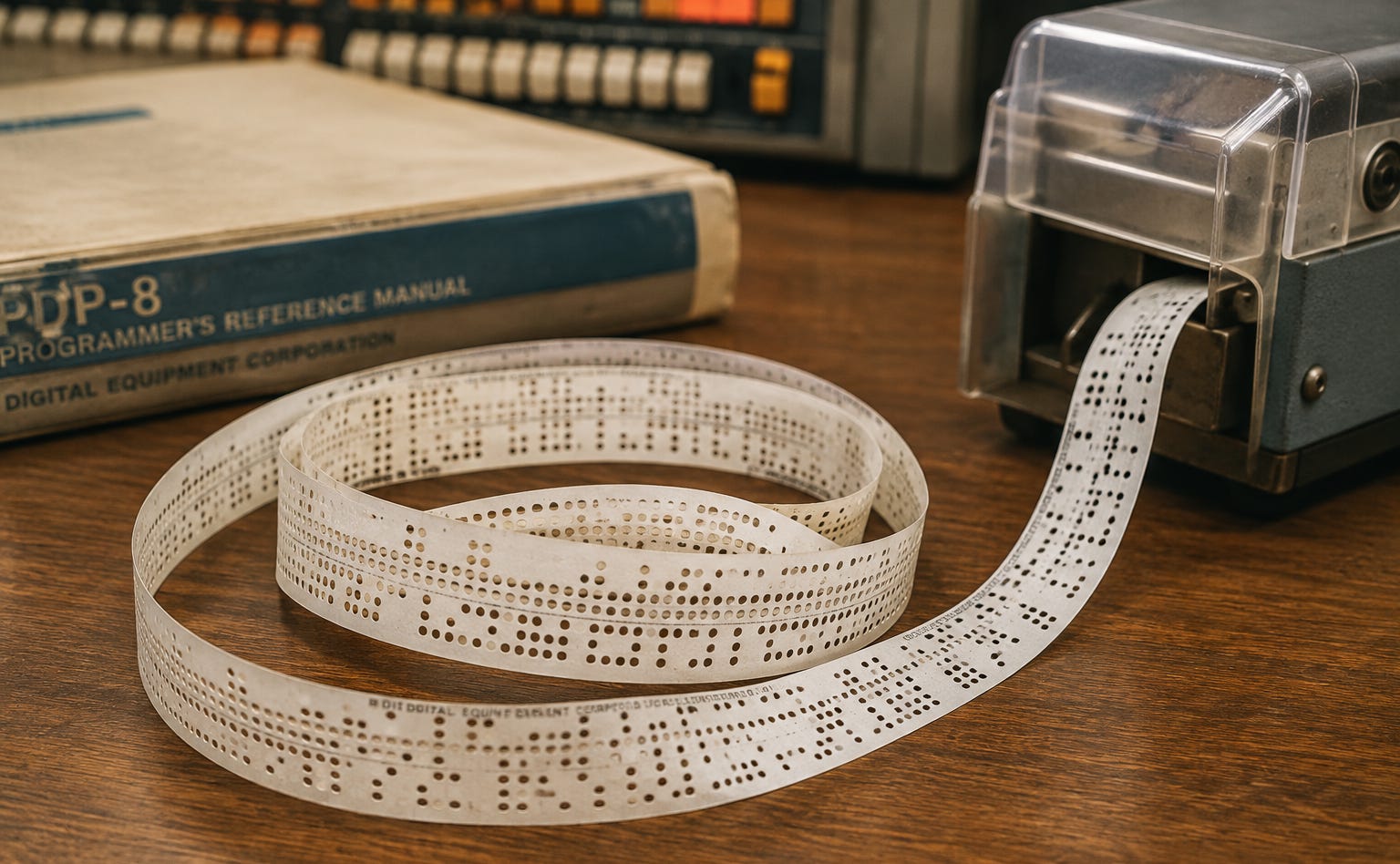
Fun fact. After a couple of years of sending a stack of punch cards to the Edinburgh mainframe computer, they proudly installed a state-of-the-art “Mini Computer”. Small enough to squeeze into the average bedroom, I could actually visit the computer center and interact with the brand new DEC PDP-8 mini computer using a computer terminal with a keyboard. To get the computer started, I had to pass a small strip of computer tape with symbols on it through a reader on the front of the computer. This strip of tape was called a bootstrap, giving rise to the term “booting” a computer that we still use today.
From those early days, the computer revolution moved quickly. The Macintosh was a revelation when it arrived in the 1980s because suddenly the computer was doing more of the work. Instead of having to remember an arcane series of commands, you could point at something and click on it. That seems completely ordinary now, but it certainly didn’t at the time.
Then fast foward to today with touchscreens and Siri and Alexa.
And now I can just tell a computer what I want.
Not in FORTRAN. Not in code. Not by working my way through six menus and trying to remember where somebody at Microsoft decided to hide a particular command.
I can ask in ordinary English. For someone who started with punch cards, that’s quite a leap in technology!
So what do I actually do with AI today?
Some of my uses of AI are decidedly unglamorous. I recently wanted to replace a mattress because I was waking up with lower-back pain. A few years ago I’d have Googled “best mattress for lower back pain,” opened a dozen websites and then spent an hour trying to work out which ones were offering genuine advice and which ones were trying to sell me a mattress.
With AI I could say: here’s my age, height and weight; I sleep partly on my back and partly on my side; this is the mattress I have now; this is what I don’t like about it; and this is where my back hurts. Then I could ask another question. And another.
I’ve used AI in much the same way for everything from medical questions to trying to work out what was going wrong with my Bermuda grass.
I’m not suggesting for a moment that I simply believe whatever it tells me. AI gets things wrong. Sometimes spectacularly wrong. And I certainly wouldn’t let it diagnose a serious medical problem and act on the answer without talking to a doctor.
But it’s remarkably good at helping me work out what questions I ought to be asking. That’s the part I hadn’t anticipated.
Google was very good at finding things. AI is good at letting me keep saying, “Yes, but what about...?” That’s a surprisingly big difference.
I use it at work too
Microsoft’s Copilot is now built into many of the Office applications I use every day. I love Copilot. It’s a superb productivity tool for anyone using MS Office.
I can give it a document and ask for the beginnings of a PowerPoint presentation. It can help pull a to-do list out of emails and calendar commitments, find possible meeting times for people scattered across several time zones, or produce a translation of a set of operating instructions.
The results usually need work. but that’s fine. If it can do 70 or 80 percent of a tedious job in a few seconds, leaving me to check it and fix the other 20 percent, I’ll take that deal. And this is where things start getting more complicated, because the same thing that makes AI so useful also worries me.
What happens to the people at the bottom of the ladder?
I’m much less worried about some science-fiction scenario in which a super-intelligent computer decides it doesn’t need us anymore than I am about something much more mundane. Entry-level jobs.
For most of my working life, people have entered professions by doing relatively basic work. That’s partly how you learn. You make mistakes, watch people who know more than you do, gradually acquire judgment and eventually become one of the experienced people yourself.
Unfortunately, AI is getting rather good at some of the work we’ve traditionally given to those beginners.
Suppose ten experienced employees, with AI helping them, can now do the work that previously required those ten people plus five juniors. The productivity argument is obvious.
What’s less obvious is where the next generation of experienced employees comes from if they don’t have an entry level to go through. I don’t know the answer to that, and I’m not convinced anyone else does either.
And then there are the computers behind the computer
When you have a conversation with an AI model, it’s easy to think that there is just a single entity chatting right back at you. You type a few words and an answer appears. It’s difficult to reconcile that experience with the enormous physical infrastructure sitting behind it. Enter the spectre of the data centers.
Data centers need land, electricity, cooling and a great deal of expensive equipment. Communities are already arguing about whether the economic benefits are worth the pressure they can put on electricity supplies, water and the surrounding environment.
Back in Edinburgh, there was no hiding the fact that computing required machinery. The computer occupied a substantial part of a building. Now the machinery has disappeared from sight, but there’s vastly more of it.
Where so we go from here?
This is where I’m reluctant to make predictions. AI can already interpret photographs, diagrams, documents and speech as well as text. Connect those abilities to the robots now being developed and it’s not difficult to imagine a machine that can see what’s around it, understand what you ask it to do and then physically do something about it.
Will that be commonplace in five years? Twenty? It’s really a question of just how long it will take to get the technology sorted out. If phones can replace computers for many of us, what physical devices will be the face of AI in the future?
Having watched people confidently predict the future of computing for more than 50 years, I’ve become rather suspicious of confident predictions about computing. What I do know is how unlikely the present would have seemed when I started.
More than half a century ago, I was sitting in my student flat in Birmingham with a borrowed FORTRAN manual, wondering whether I could persuade a computer I’d never actually seen to simulate the development of a living organism.
Since then I’ve watched computers move from special air-conditioned rooms onto our desks, then our laps, into our pockets and finally onto our wrists.
For most of that time, however sophisticated they became, they were still recognizably machines. We learned how to operate them and they did what we told them to do. This feels different.
I’m now talking to a computer. I ask questions. I disagree with its answers. I show it photographs. I ask it to explain itself. Occasionally I tell it that it’s completely misunderstood me and we start again. I’m impressed by it, excited by it and, yes, a little worried by it.
If you’d shown ChatGPT to that biology student in Birmingham, I’m quite certain he wouldn’t have believed you.
And if I’m fortunate enough to make it to 90, I suspect the technology I’ll encounter then will seem equally improbable to the person writing this today. Let’s see what the future brings!